In-House OHS Training for KITB Tanjung Buton, Siak OHS/K3 training and certification in Medan and Sumatra
Syllabus and in-house proposal for teams in Tanjung Buton Industrial Estate (KITB), Siak, matched to your site, job roles and certification route.
RTI coordinates training. Certificates and licences are issued by the relevant authorised institution, not RTI.
Medan office: Jl. Bantam No.8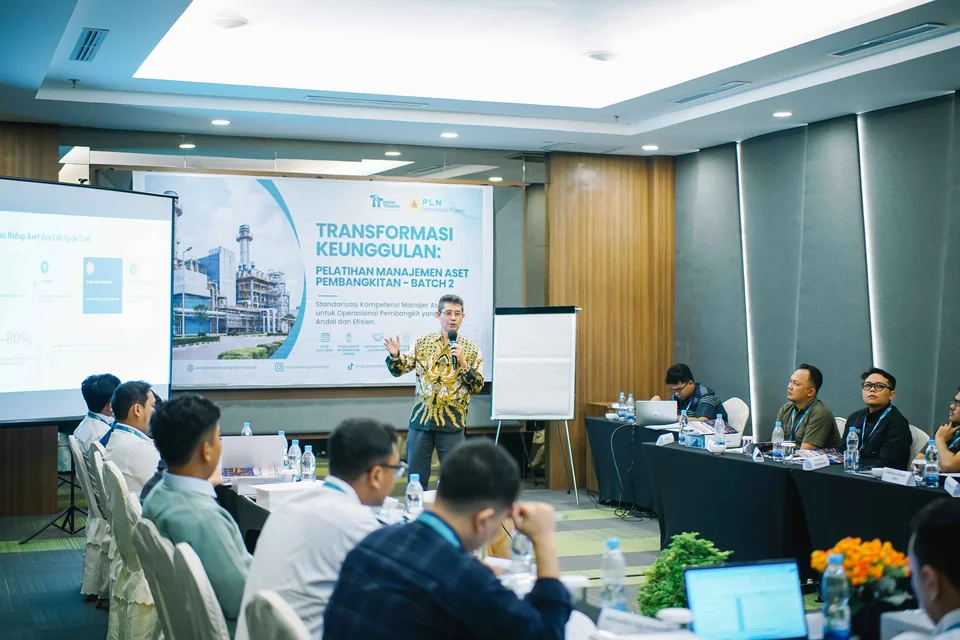
Programmes for your team
The route column shows which authority may issue the evidence. The two do not substitute for one another, and choosing the wrong route is the most common way an OHS budget is wasted.
Ahli K3 Umum (General OHS Expert). Kemnaker
Appointment basis: Per.02/MEN/1992. Roles and participant prerequisites are verified prior to proposal; not a confirmed tenant requirement claim.
Lifting equipment operators and riggers. Kemnaker
Permenaker 8/2020. Selected by equipment type and function; competency certificates do not automatically replace mandatory Kemnaker OHS licences.
Working at height / rope access technicians. Kemnaker
Permenaker 9/2016. Categorized by work method and elevated task requirements, avoiding a single generic certificate for all height work.
Electrical OHS technicians and experts. Kemnaker
Permenaker 12/2015 jo. 33/2015. Mapped across project installations and planned industrial facilities.
Welders (Juru Las). Kemnaker
Per.02/MEN/1982. Class I/II/III welder certifications mapped by task; basic hot work safety does not substitute for certified welder qualification.
Confined space entry and rescue personnel. Kemnaker
Permenaker 11/2023. Specific duties differentiated; relevant once confined space inventories and rescue procedures are established, primarily for operational prep.
Pressure vessel and storage tank technicians. Kemnaker
Permenaker 37/2016. Duties mapped per equipment type. Does not automatically cover boiler operators, which require separate statutory verification.
Power and production machine operators. Kemnaker
Permenaker 38/2016. Planned for operational readiness once production equipment types and operator duties are confirmed.
First aid attendants and fire response teams. Kemnaker
Per.15/MEN/VIII/2008 and Kep.186/MEN/1999. Distinct roles configured based on workplace conditions. Port TKBM personnel follow Ministry of Transportation (Kemenhub) pathways, not automatically Kemnaker.
The difference between the two routes, their legal basis, who is permitted to deliver them, and what a labour inspector checks, is covered in full on this cluster’s parent page. See the comparison of the two OHS certification routes.
Corporate programmes documented by RTI
These records show corporate programme delivery. They are not K3 training records and not evidence of programmes in Tanjung Buton Industrial Estate (KITB), Siak.
PT PLN Indonesia Power UBP Pangkalan Susu
Power Generation Asset Management and Facility & Civil Building Management. Batches 1 and 2 are documented in Medan, including Four Points by Sheraton and Ibis Styles Pattimura.
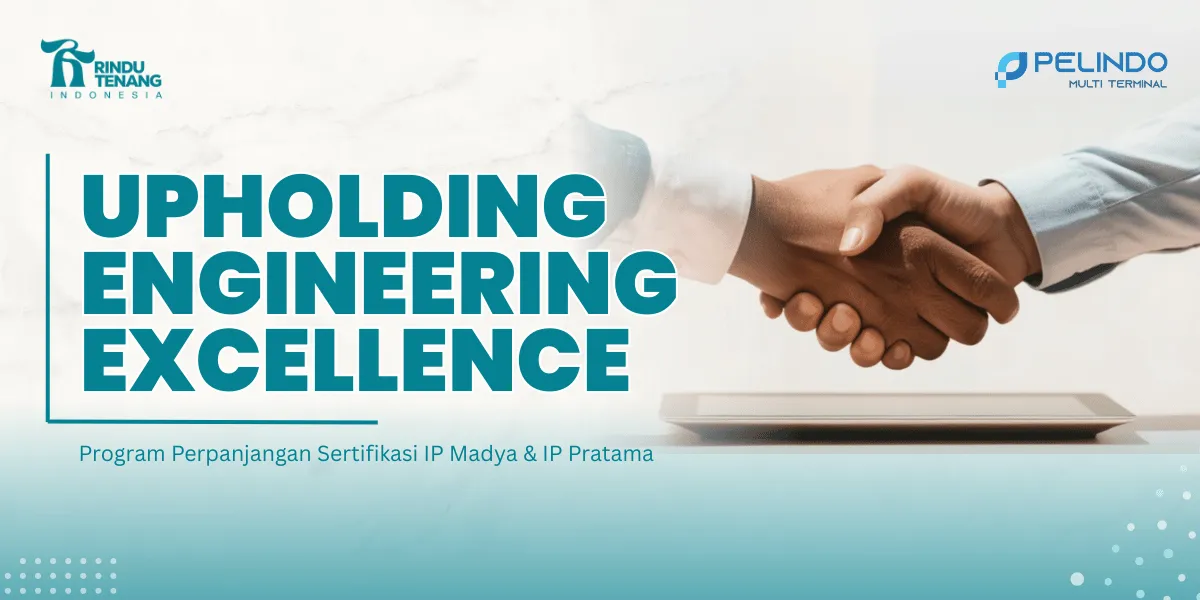
PT Pelindo Multi Terminal
IP Madya & IP Pratama professional engineer certification renewal at the Pelindo Multi Terminal office in Belawan. The completed programme page lists a capacity of 8 participants.
Plan an in-house K3 programme for KITB Siak
Use the request to discuss syllabus topics, participant requirements, the appropriate certification route, delivery location and a proposal for your company. RTI coordinates the programme; certificate and licence issuance follows the relevant institution’s authority.
Send a company request
Jl. Bantam No.8, Petisah Hulu, Kec. Medan Baru, Kota Medan, Sumatera Utara 20152 0811-309-902Your site in Tanjung Buton Industrial Estate (KITB), Siak is already noted below. Add the programme, or describe the job roles or audit requirement if you have not chosen one.
Area details: Tanjung Buton Industrial Estate (KITB), Siak
Sungai Apit, Siak Regency, Riau, construction phase
Tanjung Buton Industrial Estate (KITB) in Sungai Apit, Siak, is entering its industrial construction phase. Groundbreaking for PT Oriental Resources Indonesia (ORI) palm downstreaming took place on 8 October 2026; shipyard development by PT Mitra Nusantara Shipyard (MNS) was inaugurated on 20 April 2026. Current training priorities centre on construction works, without claiming that refineries or shipyards are currently operational.
Classroom locations, site access, practical demonstration space, scheduling, and trainer deployment are confirmed during proposal review. No travel durations or estate entry permits are presumed. RTI offers customized in-house OHS syllabus and proposal planning for companies and contractors operating in KITB, Sungai Apit, Siak. The current construction phase requires mapping risks across lifting operations, working at height, welding, temporary power installations, and works near water based on active job tasks. Facility plans announced for ORI include storage tanks, refinery, biofuel, palm oil mill (PKS), and supporting utilities; these are planned installations rather than evidence of current operations. Operational readiness for shipyard and palm processing works is addressed separately once plant configuration, standard procedures, materials, and job descriptions are finalized. Typical hazards listed below reflect industry standards, not on-site audit findings at KITB. Role requirements and certification pathways must be mapped per function; general training certificates do not substitute for mandatory OHS licences, appointments, or competency certifications. Mention of ORI and MNS does not imply client affiliation or prior training delivery by RTI.
Estate profile
- Location
- Sungai Apit District, Siak Regency, Riau Province
- Context as of 9 October 2026
- Ongoing construction for ORI palm downstreaming and MNS shipyard; commercial operation dates remain unverified.
- Information boundaries
- ORI and MNS are cited as public development context, not RTI clients. Hazard profiles represent typical industrial risks, not observed site audits at KITB.
- Official sources
- Development context; not evidence of operations or RTI client relationships. Siak Regency, 8 October 2026 ANTARA Riau, 20 April 2026
The estate name on this page identifies a location. PT Rindu Tenang Indonesia is not affiliated with the estate operator and does not represent it.
Hazards specific to KITB Siak
This list decides which programmes are genuinely relevant. OHS training designed without looking at the hazards actually present on site passes on paper and fails on inspection.
Construction: lifting and piling operations
Typical industry hazard, not a site observation at KITB: dropped loads, rigging failure, and heavy machinery interaction with ground personnel. Syllabi cover lifting plans, exclusion zones, and rigger-operator communication tailored to site equipment.
Construction: working at height and temporary power
Typical industry hazard, not a site observation at KITB: falls from structures or scaffolding and electrical shock from temporary panels. Modules address safe work methods, fall arrest systems, routine inspections, and site lockout procedures.
Construction: hot work and works near water
Typical industry hazard, not a site observation at KITB: sparks, fumes, fire risks, and water immersion. Focus includes hot work permits, fire watch protocols, and emergency water rescue planning when within contractor scope.
Future operations: confined spaces in shipyards
Once shipyard operations commence, vessel tanks and double bottoms require atmospheric testing, continuous ventilation, and rescue standby. This represents future operational planning, not evidence that the MNS shipyard is currently operating.
Future operations: process tanks, machinery, and energy
Palm processing and refining involve storage tanks, rotating equipment, thermal fluid, and electrical loads. Machine guarding, hazardous energy control, and personnel roles will be mapped once facilities are installed; operation of ORI facilities has not been verified.
Future operations: process chemicals and utilities
Typical processing and wastewater hazards involve chemical exposures and hazardous gases. Specific chemicals used by ORI remain unverified. Course materials must rely on plant SDS and verified process data, rather than assumptions.
Certification routes and issuing bodies
Three independent bodies, and what each one issues
Proof of OHS competence in Indonesia does not come from a single door. Three official routes exist, each with its own legal basis, and they stand on their own, they are not tiers, they do not replace one another, and holding one does not confer the others. Working out which one is actually being asked for is the first step, before any budget is committed.
Kemnaker, Ministry of Manpower
Its role: Labour regulator
What it issues: OHS licences and letters of appointment
The obligation comes from labour law, Act No. 1 of 1970 and the ministerial regulations beneath it. This is the route a labour inspector checks on a site visit, and for roles such as lifting-equipment operator or OHS electrical technician, nothing else can stand in its place.
BNSP, National Professional Certification Agency
Its role: Authority for individual competency certification
What it issues: Competency certificates from a BNSP-licensed LSP
It rests on the SKKNI national competency standards, and the certificate is issued by a Professional Certification Body (LSP) holding a BNSP licence, not by BNSP itself, and not by the training provider. This is the route usually asked for at tender prequalification and in customer audits.
BNSPKAN & IAF, National Accreditation Committee & International Accreditation Forum
Its role: Accredits the body, not the person
What it issues: Accreditation of certification bodies, e.g. SNI ISO/IEC 17024
This layer assesses the institution, not the candidate. KAN accredits certification bodies in Indonesia, and KAN's membership of the IAF Multilateral Recognition Arrangement is what makes that accreditation recognised abroad. The companies that benefit are those whose certificates must be accepted by an overseas client or principal.
KAN IAFAll three stand on their own. Holding a BNSP certificate does not discharge a Kemnaker licensing obligation, and KAN accreditation replaces neither. PT Rindu Tenang Indonesia issues none of them, RTI runs the preparatory training and arranges the competency assessment, while the proof itself is issued by the authorised body. Mapping which one your site is actually being asked for comes first, and costs nothing at that stage.
How classes are run inside KITB Siak
Running training inside a gated estate is not a matter of bringing a projector. Here is what we arrange before the delivery date.
Specify project location and site liaison
Identify project, company name, training room location, and designated coordinator in Sungai Apit. Security clearance and induction requirements are confirmed with the company and estate management; RTI does not claim pre-existing gate passes.
Syllabus tailored to construction phase
Submit lists of ongoing works, machinery, participant roles, and schedules. Proposals distinguish between safety briefings, safe work practices, and statutory certification pathways.
Separate future operational preparation
For future shipyard, refinery, or palm mill requirements, provide commissioning schedules, equipment registries, SOPs, and SDS. Operational training modules are scheduled separately from civil works.
Verify venue and practical exercise safety
Training rooms, power, practical rigs, safe access, mobilization, and fees are finalized prior to delivery. Practical drills do not use active equipment or hazardous areas without formal controls and approval.
Other industrial areas in Sumatra
Every area has its own hazards, certified roles, and access rules. If your company operates in more than one of them, all of it can be covered by a single proposal.
- Medan Industrial Estate (KIM): OHS programmes for Medan Industrial Estate tenants
- Tanjung Morawa & Medan Star: OHS programmes for plants in Tanjung Morawa
- Sei Mangkei Special Economic Zone: OHS programmes for Sei Mangkei SEZ tenants
- Kuala Tanjung, Batu Bara: OHS programmes for heavy industry in Kuala Tanjung
- Port of Belawan: OHS programmes for port operations in Belawan
- Palm Oil Mills of North Sumatra: OHS programmes for palm oil mills
- Pulp Industry in Porsea, Toba: OHS programmes for the pulp industry in Porsea
- Construction & Infrastructure Projects, North Sumatra: construction OHS programmes for projects in North Sumatra
- Galang Batang SEZ: OHS programmes for Galang Batang SEZ smelters
- Batamindo Industrial Park: OHS programmes for Batamindo electronics manufacturing
- Dumai Industrial Estate: OHS programmes for Dumai chemical & refinery plants
- Pekanbaru Industrial Area: OHS programmes for Pekanbaru offices, warehouses, and industry
- Tanjung Enim Industrial Estate: OHS programmes for Tanjung Enim coal chemical
Not sure which area applies, or would you rather see the province-wide picture first? See the OHS Training & Certification, Sumatra page.
Frequently asked questions
Are ORI and MNS clients of RTI?
No such claim is made. Both company names originate from public reports regarding KITB industrial development. This page offers training planning for projects in that location, not evidence of training delivered to either company.
Is the ORI refinery currently operating?
Official Siak Regency reports state construction commenced on 8 October 2026 for planned palm downstreaming facilities. Commercial operation dates remain unverified. Operational training for refinery, mill, and biofuel units is positioned as future scope.
Can we request in-house syllabi and proposals for KITB Sungai Apit?
Yes, companies may submit project locations, job roles, attendee counts, and program needs. In-house delivery depends on agreed scope, schedule, safe venue availability, and site access approval; estate entry is not pre-guaranteed.
When is a company legally required to implement SMK3?
Government Regulation (PP) 50/2012 Article 5 paragraph (2) mandates SMK3 implementation for companies employing at least 100 workers or having high potential hazard levels. Paragraph (3) refers to statutory regulations for defining high potential hazard. These are corporate statutory criteria, not a claim that all KITB tenants automatically meet the threshold.
Are the hazard listings based on an audit of KITB?
No. Hazard listings provide typical industrial examples for construction, shipyards, and palm processing. Actual site hazards and syllabus priorities must be established through contractor work plans and company risk assessments.
Does a course certificate replace mandatory personnel licences?
No. General training certificates do not substitute for statutory OHS licences, official appointments, or certified competencies required for designated functions. Proposals clearly define credential pathways, participant prerequisites, and issuing authority.
A finding to close at KITB Siak?
Tell us the roles involved and what prompted it. We map the correct route first, then build the programme and the proposal.