PT PLN Indonesia Power UBP Pangkalan Susu
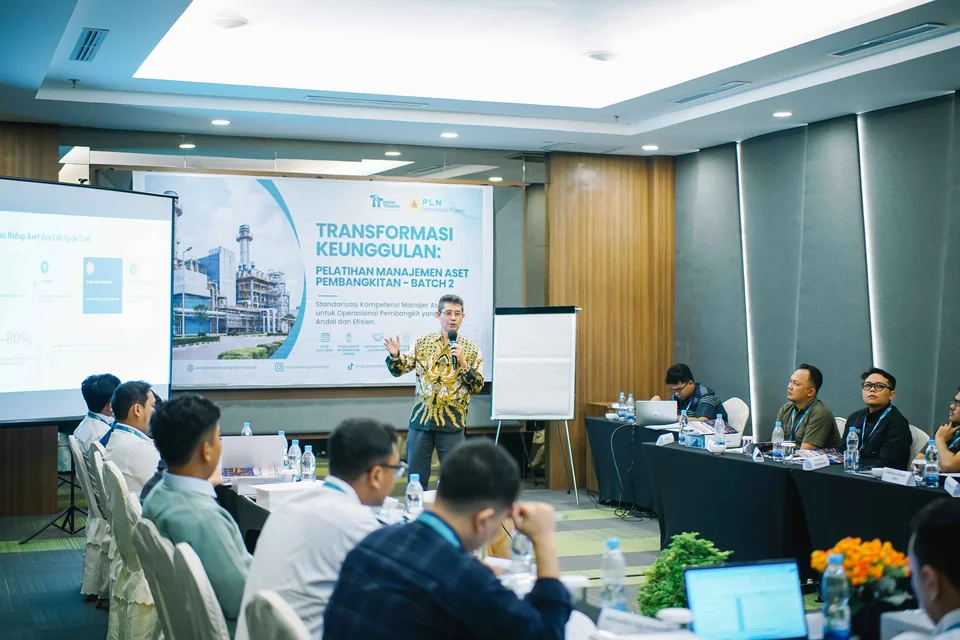
Power Generation Asset Management and Facility & Civil Building Management. Batches 1 and 2 are documented in Medan, including Four Points by Sheraton and Ibis Styles Pattimura.
PT Rindu Tenang Indonesia, based in Medan, prepares in-house K3 training for companies across Sumatra. Syllabus, certification route and schedule follow the participants’ job roles, work processes and hazards at your site.
RTI coordinates training and certification. Certificates and licences are issued by the authorised bodies such as Kemnaker and BNSP through an LSP, not by RTI.
Each sector has its own page covering the programme detail, the certification route, and the questions that come up most often.
These records show corporate programme delivery, not K3 training or completed programmes in the industrial estates listed on this page.
Power Generation Asset Management and Facility & Civil Building Management. Batches 1 and 2 are documented in Medan, including Four Points by Sheraton and Ibis Styles Pattimura.
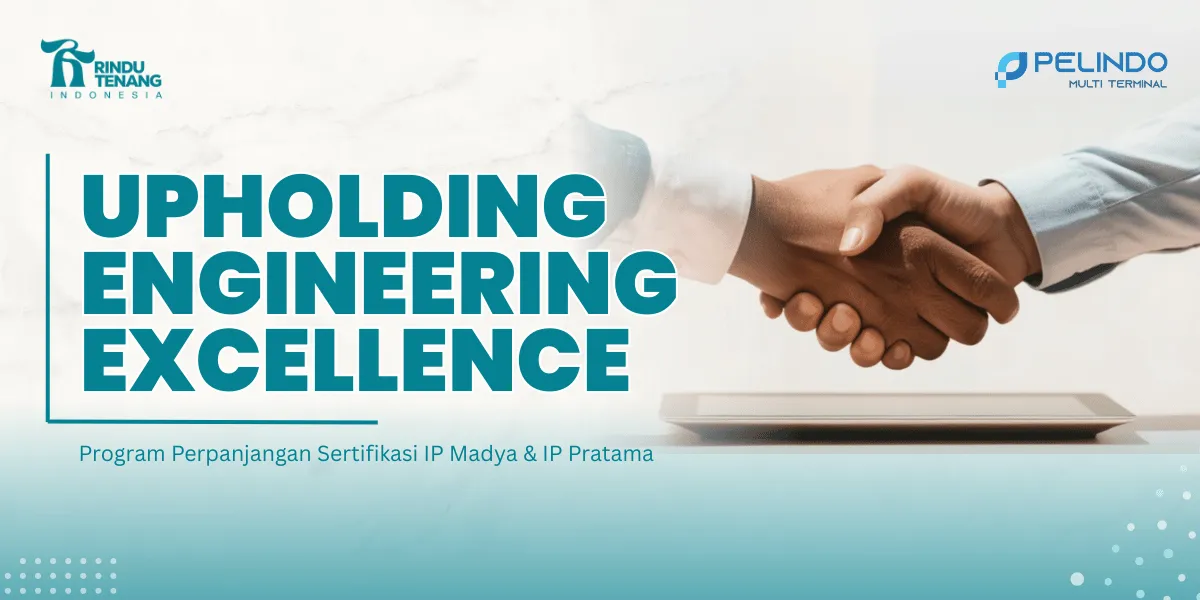
IP Madya & IP Pratama professional engineer certification renewal at the Pelindo Multi Terminal office in Belawan. The completed programme page lists a capacity of 8 participants.
The experience portfolio also documents government Bimtek and institutional events, including Inspektorat Kota Medan. These are separate from the K3 offer.
Use the request to discuss syllabus topics, participant requirements, the appropriate certification route, delivery location and a proposal for your company. RTI coordinates the programme; certificate and licence issuance follows the relevant institution’s authority.
Tell us your location and programme in the notes. If you have not chosen a programme, describe the job roles or audit requirement.
Sumatra is not a single uniform market. Refineries and oil fields in Riau call for confined space competency and H2S readiness; palm oil mills in North Sumatra and Riau deal with steam equipment and boilers; container terminals at Belawan and Batam need lifting equipment operators and riggers; mines in South Sumatra and Bangka Belitung follow a different competency route again. Programmes are built per location because the hazards are different per location.
Coverage of this page: 10 provinces in Sumatra; 34 industrial estates on the ministry register; 7 sectors with a dedicated programme.
The industrial estate names and areas below follow the register kept by the Ministry of Industry. Provinces with no registered estate are still served, since their industry sits outside the formal estates.
Registered industrial estates: Sei Mangkei SEZ (1,933.8 ha), Medan Industrial Estate (918 ha), Medanstar Industrial Estate (103 ha).
The largest industrial estate area in Sumatra, alongside the Port of Belawan and a cluster of palm oil mills.
OHS Training & Certification, North SumatraRegistered industrial estates: Galang Batang SEZ (1,800 ha), Tanjung Sauh Industrial Estate (552.67 ha), Bintan Inti Industrial Estate (325 ha), Batamindo Industrial Park (318 ha), Kabil Integrated Industrial Estate.
Twenty registered industrial estates, the highest count in Sumatra, concentrated in Batam and Bintan.
Registered industrial estates: Dumai Industrial Estate (1,049.95 ha), Tenayan Industrial Estate (265 ha), Dumai Sejati Industrial Estate (165.4 ha), Gerindo Eco Industrial Park, Tanjung Buton Industrial Estate.
A centre for oil and gas and downstream palm processing, where confined space and hot work competency stand out.
Registered industrial estates: Tanjung Enim Industrial Estate (585 ha).
A coal mining cluster that follows its own competency route under mining sector supervision.
Registered industrial estates: Sadai Industrial Estate (400 ha), Mitra Propindo Lestari Industrial Estate (270 ha).
Tin and mineral processing, carrying smelting and hot material handling hazards.
Registered industrial estates: Padang Industrial Park (145 ha).
Cement production and the Teluk Bayur port drive most of the competency demand here.
Registered industrial estates: Aceh Industrial Estate at Ladong (65.6 ha).
Only one registered estate so far; most demand sits with energy operations and ports.
Registered industrial estates: Waylaga Bizpark (50.7 ha).
The land gateway to Sumatra, with agro-industry and the Bakauheni ferry port.
Registered industrial estates: No registered industrial estate.
No registered industrial estate yet; demand centres on palm oil mills and oil and gas operations outside the formal estates.
Registered industrial estates: No registered industrial estate.
No registered industrial estate yet; demand centres on coal mines and palm oil mills.
34 INDUSTRIAL ESTATES & SEZs
We deliver in-house OHS training and competency preparation across all officially registered industrial estates (Ministry of Industry) and Special Economic Zones (SEZs) throughout Sumatra's 10 provinces. Each industrial hub carries unique hazard profiles tailored within our customized on-site syllabi.
Palm Oil Downstream & Manufacturing SEZ. OHS focus: Boilers, pressure vessels, chemical handling, waste management, SMK3.
View location guidelines and programmeBauxite Processing & Smelter SEZ. OHS focus: Metal smelting, high-voltage electrical, confined space, heavy machinery.
View location guidelines and programmeOleochemical & Oil/Gas Industrial Estate. OHS focus: Storage tanks, confined space entry, hot work permits, fire protection.
View location guidelines and programmeNorth Sumatra's Largest Integrated Estate. OHS focus: Forklifts, lifting equipment, workplace environment safety, P2K3.
View location guidelines and programmeCoal Downstream Industrial Zone. OHS focus: Mining safety, toxic gas detection, heavy equipment operations.
View location guidelines and programmePrecision Manufacturing & Electronics Park. OHS focus: Electronics assembly safety, ergonomics, industrial electrical, ISO 45001.
View location guidelines and programmeTin & Mineral Smelting Industrial Zone. OHS focus: Hot material handling, specialized PPE, dust & emissions monitoring.
In-house consultation for this areaPort Operations & Global Logistics. OHS focus: Riggers, harbor cranes, marine scaffolding, quayside safety protocols.
View location guidelines and programmeCement & Food Processing Estate. OHS focus: Machine guarding, particulate dust controls, working at heights.
In-house consultation for this areaRegional Logistics & Processing Zone. OHS focus: Warehouse safety, electrical integrity, occupational safety management.
In-house consultation for this areaDistribution & Agro-Industry Corridor. OHS focus: Fleet safety, industrial facility maintenance, first aid (P3K).
In-house consultation for this areaAgro-Industrial Milling & Pulp Processing. OHS focus: Steam turbines, sterilizers, digesters, clarifiers, confined spaces, heights.
View location guidelines and programmePort & Warehousing. OHS focus: Crane and forklift operators, rigging, confined spaces in storage tanks, fire safety.
View location guidelines and programmeIndustrial Estate Under Construction (Shipyard & Palm Oil Downstream, Not Yet Operational). OHS focus: Shipyard construction and planned palm oil processing: lifting, working at height, hot work, operational readiness.
View location guidelines and programmeThe following industrial estates are registered in the official Ministry of Industry directory and are fully covered by our on-site in-house OHS training programmes.
The job role to be certified decides the issuing body. The three bodies and what each issues are in the panel below.
Ministry of Manpower
The obligation comes from labour law, Act No. 1 of 1970 and the ministerial regulations beneath it. This is the route a labour inspector checks on a site visit, and for roles such as lifting-equipment operator or OHS electrical technician, nothing else can stand in its place.
National Professional Certification Agency
It rests on the SKKNI national competency standards, and the certificate is issued by a Professional Certification Body (LSP) holding a BNSP licence, not by BNSP itself, and not by the training provider. This is the route usually asked for at tender prequalification and in customer audits.
National Accreditation Committee & International Accreditation Forum
This layer assesses the institution, not the candidate. KAN accredits certification bodies in Indonesia, and KAN's membership of the IAF Multilateral Recognition Arrangement is what makes that accreditation recognised abroad. The companies that benefit are those whose certificates must be accepted by an overseas client or principal.
All three stand on their own. Holding a BNSP certificate does not discharge a Kemnaker licensing obligation, and KAN accreditation replaces neither. PT Rindu Tenang Indonesia issues none of them, RTI runs the preparatory training and arranges the competency assessment, while the proof itself is issued by the authorised body. Mapping which one your site is actually being asked for comes first, and costs nothing at that stage.
PT Rindu Tenang Indonesia is a competency preparation provider. RTI is not an appointed OHS services company (PJK3), not a professional certification body, and not an accreditation body; it does not issue competency certificates or Kemnaker licences. Where a requirement genuinely has to go through the Kemnaker route, RTI maps that at the outset and directs you to an authorised provider. This division of roles is stated before the contract, not after it.
Yes. Programmes run in-house at your workplace across all ten provinces of Sumatra. For sites far from a major city the schedule is usually arranged as a block of consecutive days, so travel is not charged repeatedly.
Competency certificates are issued by the authorised body for that route, Kemnaker for the OHS development route and BNSP through an LSP for the professional certification route. RTI prepares participants until they meet the requirements, and does not issue those certificates itself.
It does not have to. Participants can be split into waves that follow the shift pattern already in place, so each wave trains without the line stopping. That split is worked out before the schedule is fixed, not after.
You are. Jambi and Bengkulu have no estate on the Ministry of Industry register, but the palm oil mills, mining operations, and oil and gas facilities in both provinces carry the same OHS obligations.
It depends on the programme and its certification route, since some routes set a ratio of participants to instructors. Tell us your headcount and sector, and we will confirm what applies to that programme.
Industrial estate names and areas follow the register kept by the Ministry of Industry. Every figure on this page can be traced to its source, and none of them assert a market ranking.
Last updated 2026-08-31