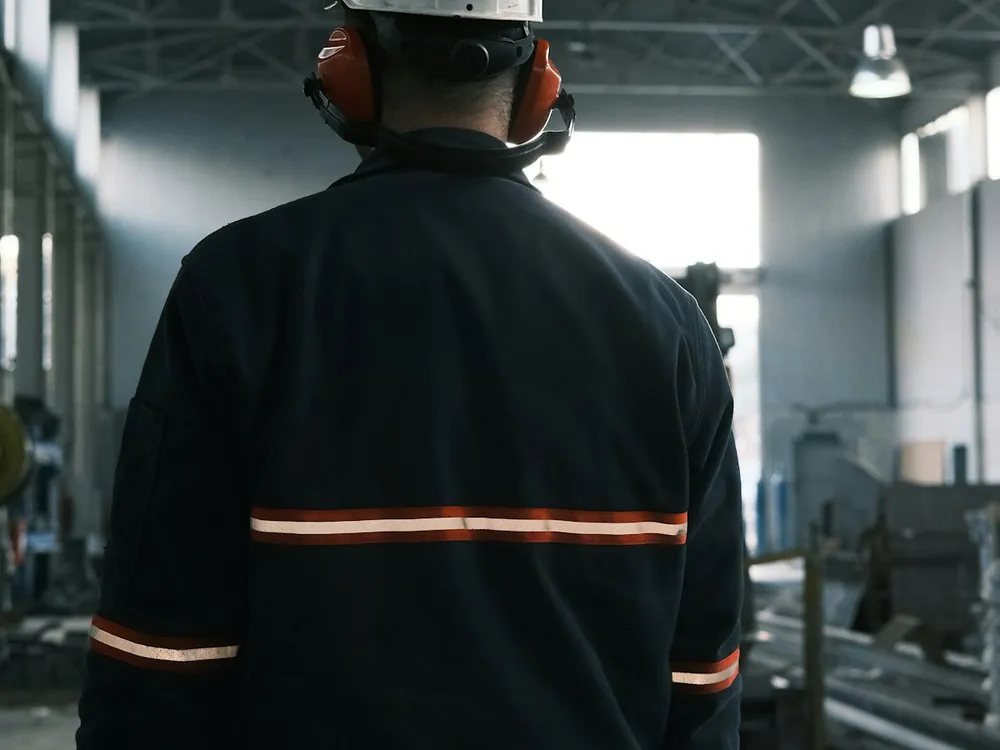
Full Regulatory Compliance
Fulfill mandates under Law No. 1 of 1970 and Ministry of Manpower regulations. Avoid operational sanctions, audit non-conformance, and legal liabilities by appointing certified OHS General Experts.
Official Certification Partner by Kemnaker RI & KAN
Enhance regulatory compliance and build a zero-accident workplace culture through professional Kemnaker RI General OHS Expert Training & Certification with PT Rindu Tenang Indonesia (RTI).
KEY COMPLIANCE & DRIVERS
Corporate Batch & Public Batch available. Executive venue at Grand Mercure Medan & in-house on-site.
PT Rindu Tenang Indonesia (RTI) is a corporate competency development provider with its office in Medan, North Sumatra. For occupational health and safety, RTI maps which roles require a licence from the Ministry of Manpower (Kemnaker RI) and which are satisfied by a BNSP-licensed competency certificate, delivers the preparatory training, and arranges the competency assessment together with partner certification bodies (LSP). The scope covers what sits under the HSE or EHS function in most companies — from the Ahli K3 Umum general safety officer and the P2K3 safety committee, lifting and material-handling equipment operators, electrical and steam-plant safety, work at height and in confined spaces, and fire response, through to readiness for SMK3 and ISO 45001. Every programme can be delivered in-house inside the plant, including in estates that impose entry permits and third-party safety inductions. RTI is not an appointed OHS services company (PJK3) and does not issue certificates itself; this division of roles is stated before the contract, not after it. RTI is not a PJK3 or an LSP. Kemnaker RI licensing is handled through an authorised PJK3, while competency certificates are issued by BNSP-licensed LSPs.
PT Rindu Tenang Indonesia programmes have run with power generation and electricity units, port terminal operators, regional financial oversight bodies, courts, and district legislatures across North Sumatra — several of them repeatedly, for different units within the same corporate group. Each logo links to that partner’s page, together with the work carried out with them.
STRATEGIC SAFETY COMPLIANCE
Why Kemnaker RI General OHS Expert certification is vital for your company: Fulfilling legal mandates under Law No. 1/1970, preventing catastrophic risks, and upholding corporate reputation.
Fulfill mandates under Law No. 1 of 1970 and Ministry of Manpower regulations. Avoid operational sanctions, audit non-conformance, and legal liabilities by appointing certified OHS General Experts.
Form internal expert personnel capable of identifying, analyzing, and mitigating hazards across high-risk environments, systematically driving toward zero accidents.
Demonstrate genuine corporate commitment to employee wellbeing (Care to Nourish) and world-class operational excellence required for tenders and global supply chain audits.
Two Routes
This is the question that most often stalls an OHS budget halfway, and the one most rarely answered openly. OHS certification in Indonesia runs along two routes that do not substitute for one another. A company that buys a certificate from the wrong route is still found non-compliant, and has to start again with the budget already spent.
We put this table ahead of the programme catalogue deliberately. You are entitled to know the limits of a provider’s authority before discussing cost.
| Aspect | Kemnaker RI route (K3 licence) | BNSP route (competency certificate) |
|---|---|---|
| What the individual ends up holding | A K3 training certificate, a K3 licence, and a Letter of Appointment (SKP) issued in the individual’s name. | A registered competency certificate in the participant’s name, listing the competency units in which they were assessed as competent. |
| Legal basis | Law No. 1 of 1970 · Minister of Manpower Regulation No. 02/MEN/1992 · sector-specific technical regulations. | Law No. 13 of 2003 · Government Regulation No. 23 of 2004 · SNI ISO/IEC 17024. |
| Who may deliver it | An OHS services company (PJK3) appointed by the Ministry of Manpower, or a government training unit. | A professional certification body (LSP) holding a BNSP licence, within the scope of that licence. |
| What a labour inspector checks | For roles whose authority is specifically regulated — Ahli K3 Umum, lifting and material-handling equipment operators, steam plant operators — the licence and the SKP are what is asked for. | Accepted as evidence of workforce competency, but it does not replace the licence for roles whose authority is specifically regulated. |
| When this is the right route | When the company is required to have personnel legally authorised to carry out particular work. | When what is needed is recognition of competency — meeting role requirements, tender documentation, closing an audit finding, or mapping the team’s competencies. |
| PT Rindu Tenang Indonesia’s part | Mapping which roles genuinely require this route and directing you to an authorised PJK3. RTI does not issue Kemnaker RI licences and does not promise them. | Delivering the preparatory training and arranging the assessment with a partner LSP, through to the certificate being issued in the participant’s name. The issuer remains the LSP, not RTI. |
In short: RTI delivers the BNSP route, and maps the Kemnaker RI route. For roles that genuinely require a Kemnaker RI licence, we say so from the outset — that it falls outside our authority — and point you to a provider that holds it, even when that means part of your requirement does not end up as our work. RTI is not a PJK3 or an LSP.
Official references: Ministry of Manpower, JDIH Kemnaker RI for the full text of each regulation, and the National Professional Certification Agency (BNSP).
Proof of OHS competence in Indonesia does not come from a single door. Three official routes exist, each with its own legal basis, and they stand on their own — they are not tiers, they do not replace one another, and holding one does not confer the others. Working out which one is actually being asked for is the first step, before any budget is committed.
Ministry of Manpower
The obligation comes from labour law — Act No. 1 of 1970 and the ministerial regulations beneath it. This is the route a labour inspector checks on a site visit, and for roles such as lifting-equipment operator or OHS electrical technician, nothing else can stand in its place.
National Professional Certification Agency
It rests on the SKKNI national competency standards, and the certificate is issued by a Professional Certification Body (LSP) holding a BNSP licence — not by BNSP itself, and not by the training provider. This is the route usually asked for at tender prequalification and in customer audits.
National Accreditation Committee & International Accreditation Forum
This layer assesses the institution, not the candidate. KAN accredits certification bodies in Indonesia, and KAN's membership of the IAF Multilateral Recognition Arrangement is what makes that accreditation recognised abroad. The companies that benefit are those whose certificates must be accepted by an overseas client or principal.
All three stand on their own. Holding a BNSP certificate does not discharge a Kemnaker licensing obligation, and KAN accreditation replaces neither. PT Rindu Tenang Indonesia issues none of them — RTI runs the preparatory training and arranges the competency assessment, while the proof itself is issued by the authorised body. Mapping which one your site is actually being asked for comes first, and costs nothing at that stage.
Almost nobody contacts us because they want to hold a training course. What has usually happened is one of the following four things — and three of them come with a deadline.
If left unresolved
The inspection ends in a notice with a deadline for correction. While that seat is vacant, the quarterly P2K3 report has no valid signatory, and the same finding will reappear at the next inspection.
What we do about it
We start by reading the notice or letter you received, not from a catalogue of programmes. That shows which roles require a Kemnaker RI licence and which are satisfied by a competency certificate — so the budget is not spent on the wrong route.
If left unresolved
Elimination at the administrative stage, before the panel ever reads the technical and price submissions. Months of preparation stop at an attachment with one document missing.
What we do about it
We first read the requirement as it is worded in the tender documents — often what is being asked for turns out to differ from what the team assumed. If the schedule genuinely cannot be met, we say so, rather than selling a cohort whose certificates arrive after the tender closes.
If left unresolved
For work whose authority is attached to a licence, that work is held until a validly certified person is available. At a palm oil mill, one steam plant operator with an expired licence is enough to stop a processing line.
What we do about it
We record the expiry dates of every certificate first, then turn them into a single annual plan. Renewals that fall close together are combined into one cohort, so assessor travel costs are not paid several times over.
If left unresolved
A repeat non-conformity is weighted more heavily than a new one, because it shows the previous corrective action did not take hold. The SMK3 implementation score drops on exactly the point that would have been easiest to evidence had the records been in order.
What we do about it
Every delivery closes with a written report: attendance list, materials, assessment results, and each participant’s certificate registration number. That is the file attached to the corrective action report — not photographs of the event.
Send us the document that triggered it; we read it before proposing anything →
THE RTI ADVANTAGE
Delivering premier executive safety development: Official Kemnaker RI credentials, senior practitioner instructors, five-star hotel facilities in Medan, and actionable field modules.
Graduates obtain official licenses, Certificates, and Authority Cards directly from the Ministry of Manpower of the Republic of Indonesia through designated PJK3 partners.
Guided directly by senior OHS experts with direct operational track records across manufacturing, palm oil, port terminals, and major industrial projects.
Conducted at executive hotel venues in Medan (such as Grand Mercure or equivalent) with full comfort, modern multimedia amenities, and premium dining.
Curriculum designed with practical applicability to solve real operational hazards and compliance audits across North Sumatra industrial clusters.
TARGET AUDIENCE
Our training structure is purposefully targeted to meet the distinct needs of corporate industrial delegations and public career professionals:
Company delegations from HRD, HSE, Operations, Maintenance, and Risk Management departments across palm oil plantations, manufacturing plants, port logistics, oil & gas, and construction contractors.
Graduates (Bachelor / Diploma in engineering, public health, science) and independent practitioners seeking to enhance professional qualifications and industrial career competitiveness.
Estates
The length of this province’s industrial corridor — manufacturing estates in Medan and Deli Serdang, palm oil downstream processing in Simalungun, port and smelting complexes in Batu Bara, and the palm oil mill belt along the east coast. The last column is the thing most often overlooked when scheduling training inside an estate: the conditions for getting in.
Every area has its own hazards, certified roles, and entry rules, and the differences are real — a port permit is not the same as a special economic zone tenant induction. The area names in the table below link to the page that covers all three in detail.
| Area / cluster | Regency / city | Dominant industry | Common OHS requirements | Site access notes |
|---|---|---|---|---|
| Medan Industrial Estate (KIM) I & II | Medan Deli, Percut Sei Tuan — Medan & Deli Serdang | Manufacturing, food processing, logistics, warehousing | Ahli K3 Umum, forklift operators, electrical safety, workplace first aid | Estate entry permit and third-party safety induction |
| KIM Star / Medan Star Industrial Estate | Tanjung Morawa — Deli Serdang | Light manufacturing, food & beverage, consumer goods | Ahli K3 Umum, power and production machinery operators, work environment safety | Tenant induction and registration of instructors’ vehicles |
| Sei Mangkei Special Economic Zone | Bosar Maligas — Simalungun | Oleochemicals, palm oil downstream processing, chemical industry | Chemical safety officers, steam plant operators, pressure vessels & storage tanks, process safety | Special economic zone permit and tenant-level induction |
| Kuala Tanjung — Port & Smelting Complex | Sei Suka — Batu Bara | Aluminium smelting, port operations, heavy industry | Lifting equipment operators, electrical safety, hot work, confined spaces | Restricted-area permit, full PPE, layered safety inductions |
| Port of Belawan & Surrounding Industrial Areas | Medan Belawan, Medan Marelan — Medan | Port operations, containers, liquid bulk, warehousing | Crane and lifting equipment operators, cargo handling safety, warehouse safety | Port working-area permit and terminal induction |
| Palm Oil Mill Belt (PKS) | Asahan, Labuhanbatu, Serdang Bedagai, Langkat | Fresh fruit bunch processing, estate steam generation | Steam plant (boiler) operators, chemical safety officers, electrical safety, first aid | Travel distance from Medan is costed separately in the proposal |
| Porsea Pulp & Fibre Complex | Porsea — Toba | Pulp, rayon fibre, chemical process industry | Process safety, chemical safety officers, confined spaces, pressure vessels | Process safety induction and escorted access to production areas |
| Construction & Infrastructure Corridor | Kualanamu, Trans-Sumatra toll road, Binjai | Construction, airport works, roadworks | Ahli K3 Konstruksi, work at height, heavy equipment safety | Project induction and scheduling around work shifts |
OHS requirements are not determined by the size of the company but by what happens on the production floor. The map below arranges this province’s large industrial ecosystems by risk profile, so you can go straight to the entry closest to your own plant.
Holding Perkebunan Nusantara units across the North Sumatra region · Simalungun, Asahan, Labuhanbatu, Serdang Bedagai
Industrial tenants in the Sei Mangkei SEZ · Simalungun
The Kuala Tanjung industrial complex · Batu Bara
Generation units at Belawan, Sicanang, and Paya Pasir · Medan
Terminals at the Port of Belawan · Medan
The pulp industry complex at Porsea · Toba
Tenants of KIM, Medan Star, and the Tanjung Morawa area · Medan & Deli Serdang
Toll road, airport, and building projects · Deli Serdang, Medan, Binjai
The names and industrial complexes above are geographical markers, used so readers recognise the locations being referred to. They are not a client list for PT Rindu Tenang Indonesia. Clients we have genuinely worked with are shown separately under Our Clients, each linking to the details of that engagement.
OHS Needs
This list is set out as a map of requirements, not a product catalogue. The route column shows through whom that recognition may validly be issued — and on several rows, the answer is not us.
| Group | What it covers | Applicable route | Legal basis |
|---|---|---|---|
| OHS personnel & committees | Ahli K3 Umum (general safety officer), forming and refreshing the P2K3 safety committee, P2K3 secretary, Ahli K3 Konstruksi (construction safety officer) | Kemnaker RI for the licence & SKP; BNSP for recognition of competency | Law No. 1 of 1970 · Minister of Manpower Reg. No. 02/MEN/1992 · Minister of Manpower Reg. No. 04/MEN/1987 |
| Lifting & material-handling equipment (PAA) | Forklift operators, overhead crane operators, mobile crane operators, heavy equipment operators (excavator, loader), riggers, PAA technicians — operator classes I, II, and III | Kemnaker RI for the operator licence and Operator Permit (SIO); BNSP for the related competency schemes | Minister of Manpower Reg. No. 8 of 2020 |
| Steam plant & pressure vessels | Steam plant (boiler) operators, pressure vessel and storage tank attendants | Kemnaker RI for the operator licence | Minister of Manpower Reg. No. 1 of 1988 · Minister of Manpower Reg. No. 37 of 2016 |
| Electrical & production machinery | Electrical safety technicians, electrical safety officers, power and production machinery operators | Kemnaker RI for the licence; BNSP for the supporting technical competencies | Minister of Manpower Reg. No. 12 of 2015 · Minister of Manpower Reg. No. 38 of 2016 |
| Work environment & industrial hygiene | Chemical safety officers, work environment safety officers, industrial hygiene, physical and chemical factor measurement, workplace first aid attendants | Kemnaker RI for the appointment of officers; BNSP for technical competency | Minister of Manpower Reg. No. 5 of 2018 · Minister of Manpower and Transmigration Reg. No. 15 of 2008 |
| Occupational health & Hiperkes | Hiperkes for company doctors, Hiperkes for company paramedics, workforce health examinations, fatigue management | Kemnaker RI — Hiperkes training is delivered by appointed institutions | Law No. 1 of 1970 · Kemnaker RI Hiperkes training provisions |
| Fire response | Fire response attendants (class D), fire response squads (class C), unit coordinators (class B), fire safety officers (class A), emergency response and evacuation drills | Kemnaker RI for all four levels | Minister of Manpower Decree No. Kep-186/MEN/1999 |
| High-risk work | Work at height (TKPK levels 1–4), high-rise building work (TKBT), scaffolding, confined space safety attendants, work permit systems, energy isolation (LOTO), hot work | Kemnaker RI for the regulated fields; the remainder as internal technical training | Minister of Manpower Reg. No. 9 of 2016 · Minister of Manpower Reg. No. 1 of 1980 · company work permit procedures |
| Welding & metalwork | Welder qualifications class 1, 2, and 3, welding work safety | Kemnaker RI for welder qualifications; BNSP for the welding competency schemes | Minister of Manpower Reg. No. 02/MEN/1982 |
| OHS management systems (SMK3 & ISO 45001) | SMK3 implementation, SMK3 internal auditors, preparation for external SMK3 audit, risk management, HIRADC and JSA, ISO 45001 certification readiness | BNSP for competency certification; the external SMK3 audit is carried out by an appointed audit body | Government Reg. No. 50 of 2012 · Minister of Manpower Reg. No. 26 of 2014 · ISO 45001 · partner LSP schemes |
| Statutory equipment inspection (riksa uji) | Inspection and testing of lifting equipment, steam plant, pressure vessels, electrical installations, and lightning protection | Outside RTI’s authority — carried out by an inspection PJK3 together with its appointed safety experts | Minister of Manpower Reg. No. 38 of 2016 · Minister of Manpower Reg. No. 37 of 2016 · Minister of Manpower Reg. No. 8 of 2020 |
The availability of each scheme is checked against the licence scope of our partner LSPs before a proposal is sent. One LSP may only assess schemes within its own scope, so cross-functional requirements at a single company sometimes need more than one body — that is ours to arrange, and not your concern.
A training certificate states that someone attended a programme. A competency certificate states that an assessor found them competent through a competency assessment. For meeting role requirements and closing audit findings, what is asked for is almost always the second.
A TUK is a venue verified by the certifying body as a place where assessments may be held. The participants’ own workplace qualifies as long as its equipment and conditions match the scheme — and in OHS, assessing someone on the machine they actually operate is far more meaningful.
Competency certificates generally run for three years, while licences on the Kemnaker RI route follow the rules of their own field. Companies that record every expiry date in one table can combine renewals that fall close together, and save a good deal by doing so.
Conversations about OHS in Indonesia are full of abbreviations used interchangeably as though they meant the same thing. A company asks for a "K3 certificate" when what it needs is an SIO; an SMK3 audit is treated as equivalent to ISO 45001 certification. Mistakes like that only surface when the auditor arrives. Here is what needs telling apart.
Four stages. The first carries no cost and no obligation — and it is at that stage that most OHS budget mistakes can actually be prevented.
| Stage | What we do | What you get |
|---|---|---|
| 1 — Reading what triggered it | Reading the inspector’s notice, audit finding, or tender requirement you received, then recording the roles and the certificates about to expire. | A list of roles with the correct route for each — which is Kemnaker RI, which is BNSP, and which needs neither. |
| 2 — Proposal & syllabus | Checking scheme availability with partner LSPs, building a syllabus around case examples drawn from your own plant processes, and itemising the cost components. | A written proposal with the syllabus outline, ready for your OHS and procurement teams to review. |
| 3 — Scheduling & venue verification | Fixing the schedule with the certifying body, verifying that the assessment venue qualifies, and arranging entry permits and safety inductions for the teaching team. | A schedule agreed by both sides that also satisfies the estate’s access requirements. |
| 4 — Delivery & reporting | Training at your site, competency assessment by an assessor, and issuance of the certificate by the authorised body. | Certificates in the participants’ names, together with an evaluation report ready to attach to your audit corrective action. |
Three options, all within the province of North Sumatra. What decides between them is not the provider’s preference but the venue requirements of the scheme you are taking and how widely your participants’ worksites are spread.
For locations outside Medan, travel and accommodation for the teaching team are costed separately and stated openly in the proposal — not buried inside the per-participant price.
The instructors and assessors travel to you. For OHS this is not merely about saving on travel: participants are assessed on the boilers, forklifts, and panels they handle every day, so the result reflects the real situation.
Conducted at executive hotel venues in Medan with full quiet luxury comfort, modern multimedia amenities, exclusive modules, and premium dining.
For companies whose worksites are far apart — estates and mills across Asahan and Labuhanbatu, or several units within one corporate network. A single combined cohort is generally cheaper than several small ones, because assessor travel is not paid for repeatedly.
One operating base, one team, the whole province. We do not create a separate page for every city just to appear in search results — this list is exactly what it says, so you can confirm your plant is within reach before contacting us.
Medan, Binjai, Lubuk Pakam, Tanjung Morawa, Percut Sei Tuan, Deli Tua, Sunggal, Hamparan Perak
Tebing Tinggi, Pematangsiantar, Sei Rampah, Perbaungan, Bosar Maligas, Lima Puluh, Sei Suka
Kisaran, Tanjungbalai, Rantauprapat, Aek Kanopan, Kotapinang, Labuhanbatu Selatan
Balige, Porsea, Kabanjahe, Berastagi, Sidikalang, Sibolga, Padangsidimpuan, Panyabungan
Stabat, Pangkalan Brandan, Tanjung Pura, Besitang
This list is not a boundary, only the areas we travel to most often. Tell us where your plant is and we will work out whether it is feasible.
Ask About CoverageProcurement teams assessing a prospective supplier rarely stop at the company profile. What they look for is a trail the supplier did not publish itself — reasonably so, since every company writes well of itself.
The logos alongside are therefore not media-partner badges. Each one links directly to the original article on that outlet’s own site, from Antara, Tribun Medan, Waspada, and Analisa Daily to Sumut Pos and IDN Times. Please open them and check before you decide.
They rest on different legal bases and serve different purposes. The Ministry of Manpower route issues a training certificate together with a K3 licence and a Letter of Appointment, delivered by an OHS services company (PJK3) appointed by the Ministry; this is what is required for roles whose authority is specifically regulated, such as the Ahli K3 Umum and operators of lifting and material-handling equipment. The BNSP route issues a competency certificate through a licensed professional certification body (LSP), used as evidence of workforce competency. A BNSP certificate does not replace a Kemnaker RI licence for specifically regulated roles, and the reverse is equally true.
No. PT Rindu Tenang Indonesia is a corporate competency development provider working with BNSP-licensed professional certification bodies. RTI does not issue Kemnaker RI K3 licences and does not promise them. Where a requirement genuinely has to go through the Kemnaker RI route, RTI maps that at the outset and directs you to an authorised provider — a division of roles we state before the contract, not after it.
The obligation to form a P2K3 occupational health and safety committee applies to companies with one hundred workers or more, and also to companies with fewer than one hundred where the materials, processes, or installations carry high risk — the provision is in Minister of Manpower Regulation No. 04/MEN/1987. The SMK3 obligation under Government Regulation No. 50 of 2012 uses a similar threshold. Because the risk assessment depends on each company’s own processes, we check it against your plant data before drawing a conclusion.
Yes. Programmes are delivered in-house inside the plant, including in estates that impose entry permits and safety inductions on third parties. Permit, induction, and personal protective equipment requirements for the teaching team are recorded during the site survey — before the schedule is fixed, not on the day of delivery.
Not necessarily. A TUK is a venue verified by the certifying body as a place where assessments may be held, and the participants’ own workplace can serve as one provided its equipment and conditions meet the scheme’s requirements. For OHS this is often an advantage: participants are assessed on the equipment they genuinely operate every day.

Validity differs by route and by field. BNSP competency certificates generally run for three years and then require recertification, with the exact terms following each scheme. K3 licences on the Kemnaker RI route have their own validity periods and renewal procedures under the regulations for their field. Companies that record the expiry dates of all their employees’ certificates find annual training planning considerably easier.
Yes. The operating base is in Medan and covers the whole of North Sumatra, including Simalungun, Batu Bara, Asahan, Labuhanbatu, Toba, and Langkat. For locations outside Medan, travel and accommodation for the teaching team are costed separately and stated openly in the proposal — not hidden inside the per-participant price.
Yes, and for companies with dispersed worksites this is usually the most economical option. A single combined cohort at an agreed meeting point is generally cheaper than several small cohorts at each location, because instructor and assessor travel is not paid for repeatedly. What you need to arrange is cross-unit approval and a workable range of dates.
The minimum follows the scheme and the assessor ratio that applies in that field, so it differs between programmes. We give the exact figure with the proposal, once the roles and participant numbers are known.
Yes, with one limit worth knowing from the start. The competency units being assessed follow a fixed scheme and cannot be changed. What is adapted is the case examples, terminology, and teaching aids used during the training — for instance using your own plant layout and incident history as the material for analysis exercises.
Because a single figure on a marketing page is almost always wrong, and being wrong hurts you when you are building a budget. Cost is driven by the route taken (Kemnaker RI or BNSP), the scheme and its level, the number of participants per cohort, the delivery location, and whether the assessment venue has to be verified first. What we give you is a written proposal with each cost component itemised — not one lump sum your procurement team cannot examine.
An SIO is the Surat Izin Operator, the operator permit for equipment such as forklifts, cranes, and heavy machinery. SIOs are issued by the Ministry of Manpower through the training route delivered by OHS services companies (PJK3), not by PT Rindu Tenang Indonesia and not by a professional certification body. If an SIO is what you need, we say so at the outset and direct you to an authorised provider.
SMK3 is a legal obligation under Government Regulation No. 50 of 2012, and its implementation is assessed by audit against three levels of criteria — 64 at initial level, 122 at transitional, and 166 at advanced — under Minister of Manpower Regulation No. 26 of 2014. ISO 45001 is a voluntary international standard certified by a certification body. Many companies run both: SMK3 to meet the obligation in Indonesia, ISO 45001 for the requirements of customers or overseas parent companies. Neither replaces the other.
Some classroom material can be delivered online, but competency assessment and practical work in OHS generally require physical attendance — the assessor needs to watch the participant handle the actual equipment. For the Kemnaker RI route, delivery follows the rules that apply in each field. We state the applicable format for your programme in the proposal, rather than promising fully online delivery and changing it later.
No. Riksa uji is the statutory inspection and testing of equipment fitness that produces a certificate of fitness for operation, and the authority for it rests with inspection PJK3s and their appointed safety experts. Our work concerns the people, not the equipment — the competency of the personnel who operate it.
Yes. PT Rindu Tenang Indonesia is an incorporated legal entity with complete corporate documentation, and is accustomed to supplying the administrative files requested by corporate and government procurement departments, including for processes running through electronic procurement systems.
Request a Proposal
You do not need to know the name of the programme. Just tell us what you are dealing with and roughly how many participants are involved. Mapping the route, checking scheme availability, and preparing the proposal are our side of the work, and nothing is chargeable at that stage.
Enhance regulatory compliance and build a zero-accident workplace culture through official Kemnaker RI General OHS Expert certification with PT Rindu Tenang Indonesia (RTI). Connect with our Commercial Growth Manager or register your corporate delegation today.
Requirements beyond OHS? See cross-functional competency certification for industry in North Sumatra, or read about the schemes, partner LSPs, and the BNSP certification process.
Need the full picture of OHS competencies first, independent of province? See the map of six OHS competency groups for corporations and industry (in Indonesian).
Last updated: 26 August 2026